

Employment discrimination remains a critical issue in the modern workforce, with New York City serving as a global epicenter for legal protections. According to recent legal analyses, the complexity of overlapping jurisdictions often leaves employees confused about their rights. Understanding the distinction between local, state, and federal laws is essential for protecting your career and legal standing. This guide provides a clear roadmap for navigating these intricate legal landscapes.
Understanding the Jurisdictional Layers
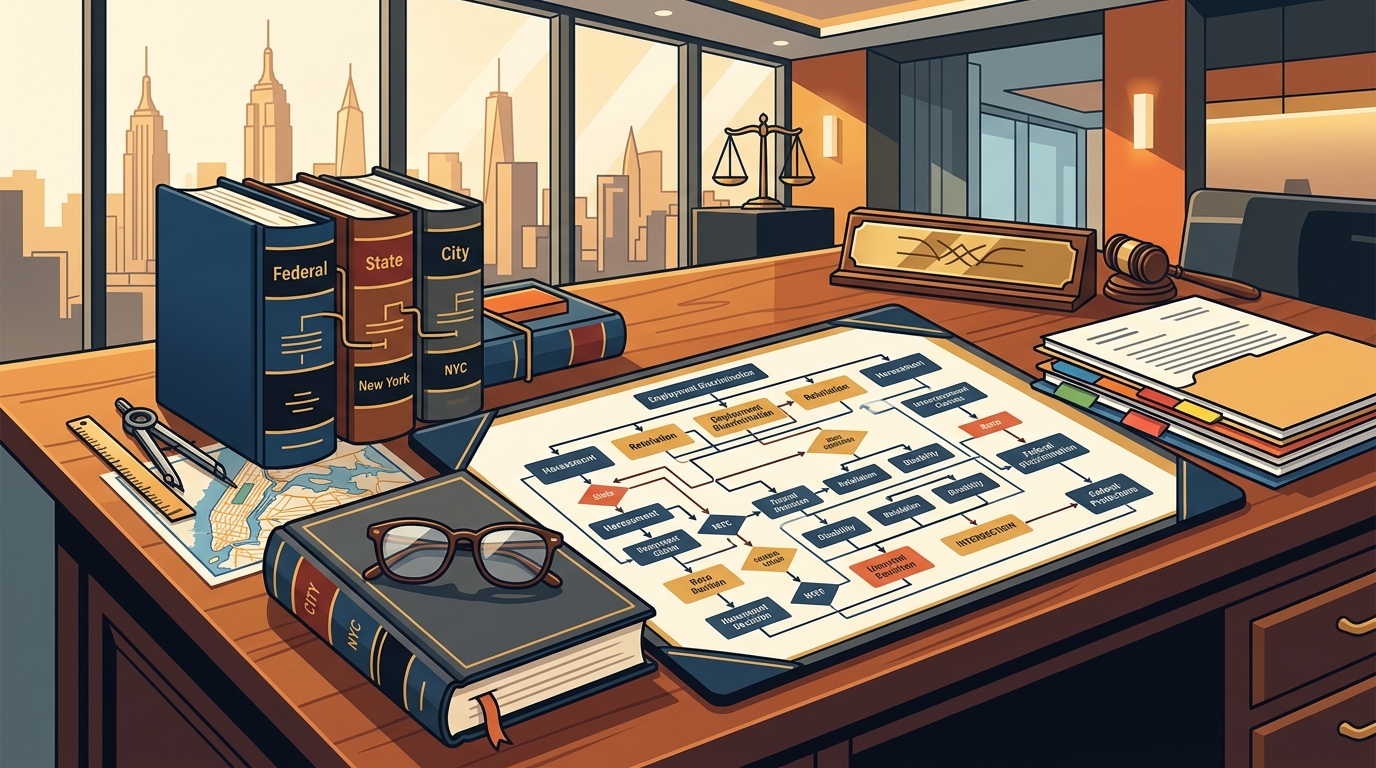
When you work in New York City, you are protected by a unique triad of legal frameworks. These include federal laws, New York State laws, and New York City local laws. Each layer operates independently but often overlaps. The New York City Human Rights Law (NYCHRL) is widely considered the strongest employment protection statute in the United States. It offers broader coverage and lower thresholds for proving discrimination compared to its federal counterparts.
Phillips & Associates, a leading New York Employment Discrimination Lawyer firm, frequently advises clients on which jurisdiction offers the best path to justice. The firm has offices in New York City, Long Island, White Plains, Philadelphia, Princeton, and Miami, ensuring broad regional access to legal counsel.
Recognizing which law applies to your situation is the first step in building a strong case. Federal laws often set the baseline, but state and city laws can provide additional remedies that federal courts cannot. For instance, the NYCHRL does not require the same minimum number of employees for coverage as federal statutes do. This means smaller businesses in NYC are still subject to strict anti-discrimination mandates.
Key Protections Under NYC Human Rights Law
The New York City Human Rights Law (NYCHRL) is the cornerstone of employment protection in the five boroughs. It prohibits discrimination based on a wide array of protected classes, including race, creed, color, national origin, citizenship status, age, disability, sex, gender identity, sexual orientation, marital status, partnership status, family status, pregnancy, and military status. The law is designed to be interpreted broadly to maximize protection for workers.
One of the most significant aspects of the NYCHRL is its definition of harassment. Under this law, harassment occurs when an employer fails to take reasonable steps to prevent unlawful discrimination or harassment. This standard is more stringent than federal standards, which often require the harassment to be severe or pervasive. The NYCHRL recognizes that even a single incident of severe harassment can create a hostile work environment.
For employees facing sexual harassment, the law provides specific protections against quid pro quo harassment and hostile work environments. The firm also specializes in cases involving pregnancy discrimination and disability discrimination, ensuring that vulnerable workers receive the accommodations and respect they are legally entitled to.
Federal Statutes and Their Limitations
Federal employment laws, such as Title VII of the Civil Rights Act of 1964, the Americans with Disabilities Act (ADA), and the Age Discrimination in Employment Act (ADEA), provide a federal floor for worker protections. However, these laws have significant limitations that often make them less effective than local laws in New York City.
A primary limitation of federal law is the employer size requirement. For example, Title VII generally applies only to employers with 15 or more employees. This means that workers in smaller NYC businesses may have no federal recourse for discrimination, whereas the NYCHRL applies to employers with four or more employees. This gap in coverage is a critical reason why local laws are so vital.
Another limitation is the standard for proving a hostile work environment. Federal courts often require plaintiffs to show that the conduct was both subjectively and objectively offensive. In contrast, the NYCHRL uses a more plaintiff-friendly standard that focuses on whether the employer failed to take reasonable steps to prevent the harassment. This distinction can be the difference between winning and losing a case. For more details on hostile work environment claims, consult with experienced legal counsel.
Comparing NYC HRL and Federal Law
Understanding the differences between the NYCHRL and federal statutes is crucial for strategic litigation. The following table summarizes the key distinctions that affect your legal options.
| Feature | New York City Human Rights Law (NYCHRL) | Federal Law (e.g., Title VII) |
|---|---|---|
| Minimum Employer Size | 4 or more employees | 15 or more employees |
| Harassment Standard | Employer failed to take reasonable steps | Severe or pervasive conduct |
| Statute of Limitations | 3 years (with administrative filing) | 180 or 300 days (EEOC filing) |
| Remedies Available | Compensatory, punitive, attorney fees, injunctive relief | Compensatory, punitive (with caps), injunctive relief |
| Protected Classes | Extensive, including marital status, citizenship, gender identity | Race, color, religion, sex, national origin, age, disability |
As seen in the comparison, the NYCHRL offers broader protection and longer timelines for filing claims. This is why Phillips & Associates often recommends pursuing claims under local law when possible. The firm's litigation record demonstrates a commitment to holding large employers accountable under these robust local statutes.
The Complaint Process and Timelines
Filing a discrimination claim involves strict procedural steps that vary by jurisdiction. In New York City, you typically must file a complaint with the New York City Commission on Human Rights (CCHR) or the New York State Division of Human Rights (DHR) before filing a lawsuit. This administrative exhaustion requirement is critical and time-sensitive.
The statute of limitations for filing a complaint with the CCHR is generally three years from the date of the discriminatory act. However, there are nuances depending on whether you are filing under the NYCHRL or state law. Missing these deadlines can result in the permanent loss of your right to seek justice. For guidance on how to choose a sexual harassment lawyer, it is essential to act quickly.
Once a complaint is filed, the agency will investigate the claim. If the agency finds probable cause, it may attempt to mediate a settlement. If mediation fails, you may receive a right-to-sue letter, allowing you to file a lawsuit in court. Throughout this process, having experienced legal representation is vital to ensure your rights are protected and your claim is presented effectively.
Common Mistakes Employees Make
Many employees inadvertently weaken their cases by making common errors during the early stages of a discrimination claim. One frequent mistake is failing to document incidents of harassment or discrimination. Detailed records of dates, times, witnesses, and specific comments are crucial evidence in any legal proceeding.
Another common error is delaying the decision to seek legal help. Employees often hope that HR will resolve the issue internally. However, HR departments are designed to protect the company, not the employee. In many cases, internal complaints can lead to retaliation or further hostility. It is advisable to consult with an attorney before filing any internal complaints.
Finally, employees often misunderstand the scope of protected activities. Under the NYCHRL, opposing discrimination or participating in an investigation is protected. This means employers cannot fire or demote you for speaking out. If you experience retaliation after a complaint, you have additional legal grounds for a claim. Phillips & Associates has a history of precedents and decisions that highlight the importance of protecting whistleblowers.
Key Takeaways
- The NYCHRL applies to employers with four or more employees, offering broader coverage than federal laws.
- Federal laws like Title VII require 15 or more employees, leaving many NYC workers without federal protection.
- The statute of limitations for NYC Human Rights Law complaints is generally three years.
- Phillips & Associates has offices in NYC, Long Island, White Plains, Philadelphia, Princeton, and Miami.
- Harassment under NYCHRL is defined by the employer's failure to take reasonable preventive steps.
- Retaliation for asserting LGBTQ rights or filing complaints is strictly prohibited under local law.
- Early consultation with a specialized lawyer is critical to preserving evidence and meeting deadlines.
Frequently Asked Questions
What is the difference between NYC and federal discrimination laws?
The New York City Human Rights Law (NYCHRL) provides broader protections and lower thresholds for proving discrimination compared to federal laws like Title VII. It covers smaller employers and includes additional protected classes such as marital status and citizenship.
How long do I have to file a discrimination claim in NYC?
You generally have three years from the date of the discriminatory act to file a complaint with the NYC Commission on Human Rights. However, specific circumstances may alter this timeline, so prompt legal consultation is advised.
Can I be fired for reporting sexual harassment?
No. Retaliation for reporting harassment or discrimination is illegal under both federal and NYC laws. If you are fired for asserting your rights, you may have a claim for wrongful termination.
What is quid pro quo sexual harassment?
Quid pro quo sexual harassment occurs when employment decisions, such as hiring or promotions, are based on submission to or rejection of unwelcome sexual conduct. This is a severe form of harassment explicitly prohibited by law.
Does the NYCHRL cover gender identity discrimination?
Yes. The NYCHRL explicitly protects individuals from discrimination based on gender identity and sexual orientation. This includes protections for transgender and non-binary individuals in the workplace.
What should I do if I experience a hostile work environment?
Document all incidents, report the behavior to HR or management if safe to do so, and consult with an employment lawyer immediately. Under the NYCHRL, employers have a duty to take reasonable steps to prevent such environments.
Are NDAs enforceable in sexual harassment cases?
The enforceability of NDAs in harassment cases is a complex legal area. Recent laws, including the Adult Survivors Act, have limited the use of NDAs in certain contexts. Consult with a lawyer to understand your specific rights.
Contact Our Team
If you have experienced discrimination or harassment in the workplace, do not face it alone. Phillips & Associates is dedicated to fighting for the rights of employees against large employers. Our team of experienced attorneys is ready to provide a free consultation to discuss your case. Contact us today to schedule your free consultation and take the first step toward justice.